


Course Summary
Contact Hour(s):
4 Contact Hours, including 1.0 CCU hour
Contact hours for LPNs in any state are earned by completing this course. This is part of a series of 24 contact hours of courses to prepare for LPN IV Certification in Florida. Florida certification participants must schedule a 6-hour live presentation and return demonstration to complete IV Certification. The live presentation is not provided by CEUFast.com.
Author:
Dana Bartlett, RN, BSN, MA, CSPI
Desiree Reinken, PhD, APRN, NP-C
This peer-reviewed course is applicable for the following professions:
Licensed Practical Nurse (LPN), Licensed Vocational Nurses (LVN)
Accreditations:
The American Nurses Credentialing Center (ANCC)
Course Description:
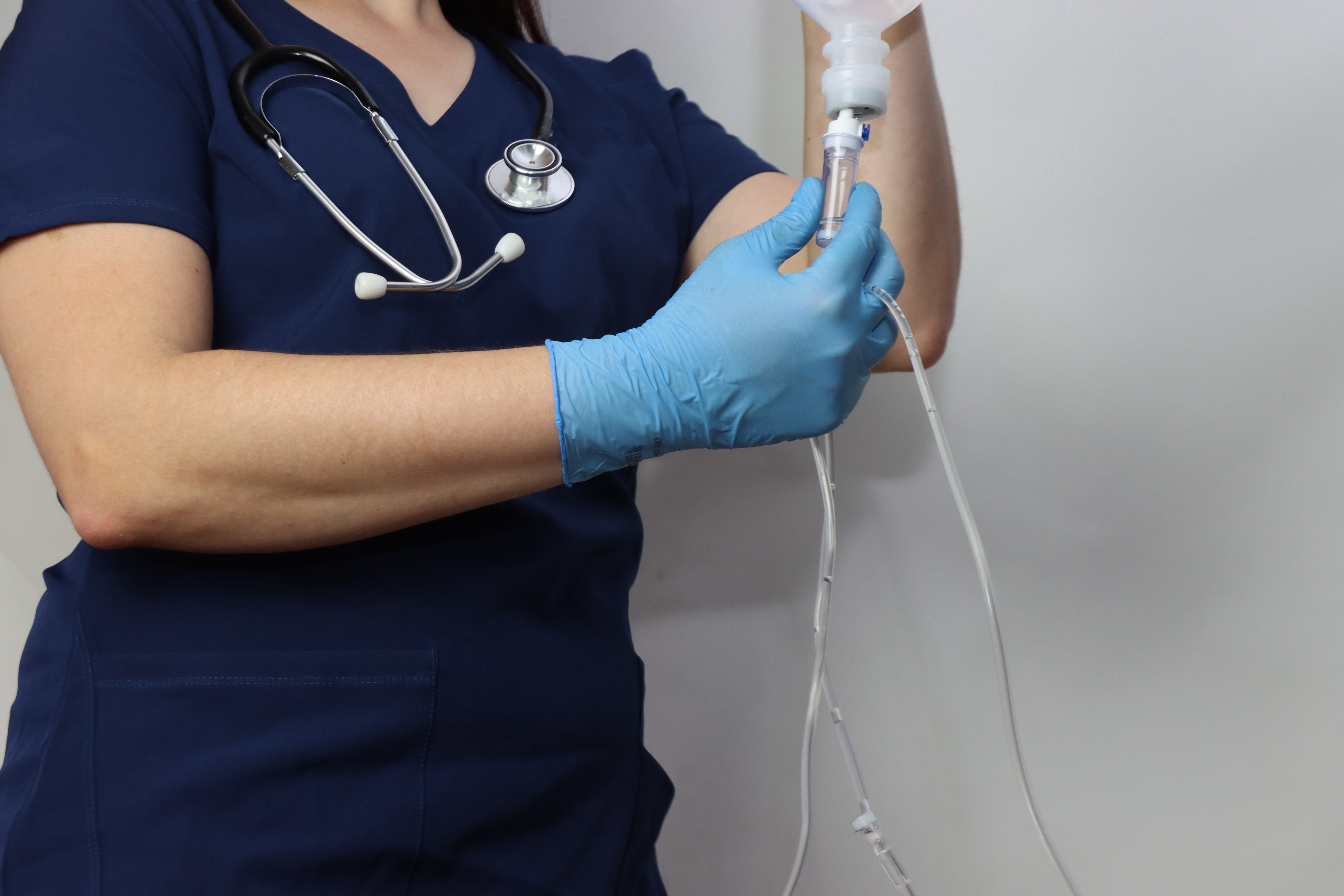
This course discusses the basics of IV medications and fluid administration, including the purpose and principles of administration. Common crystalloid IV solutions are also discussed. Effective and safe IV administration of specific drugs, including complications and adverse effects, are addressed.
Outcomes:
≥ 92% of participants will know how to administer IV medications and fluids safely and correctly.
Objectives:
After completing this continuing education course, the participant will be able to:
- Identify the types of IV medications that are commonly used.
- Summarize complications of IV medication administration.
- Evaluate essential principles of IV medication administration.
- Analyze adverse effects and warnings for medications covered in this course.
- Examine types of electrolytes that, when given IV, are high-alert medications.
- Outline the differences between crystalloid IV solutions.
Disclosures:
CEUFast Inc. and the course planning team for this educational activity do not have any relevant financial relationship(s) to disclose with ineligible companies whose primary business is producing, marketing, selling, re-selling, or distributing healthcare products used by or on patients.